Wedding Catering Trends 2026 and 2027: Less Formal, More Memorable
Wedding food is changing and, well, it’s about time.
The traditional three-course wedding breakfast isn’t disappearing completely. For some couples, it is perfect, glorious and fits the day. However, more people are questioning whether an afternoon spent negotiating table plans and waiting for three identical plates is really how they want to celebrate.
The wedding catering trends shaping 2026 and 2027 point towards something more relaxed, generous and personal:
Sharing feasts,
Beautiful grazing tables,
Interactive food stations,
Brilliant comfort food, and;
Something hot arriving just as the dancefloor is feeling the need for some carbs to carry those heels a little further.
This isn’t about making a wedding feel less special. It is about losing some of the formality while keeping all the gorgeous hospitality.
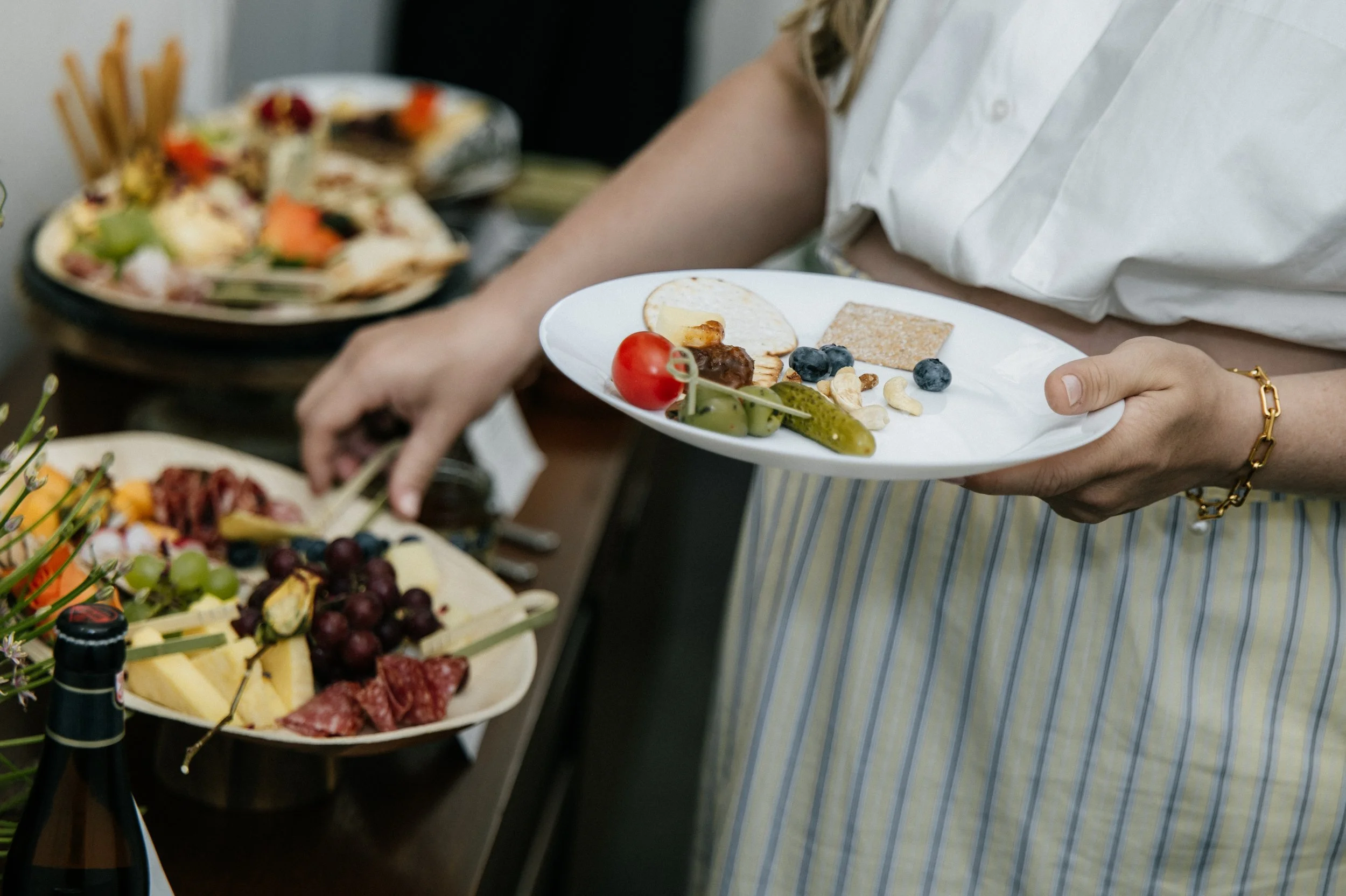
Photography by Liga Kalnina - https://ligakalnina.com/
The modern wedding is becoming smaller, but more intentional
According to Bridebook’s 2026 UK Wedding Report, based on more than 7,000 couples, the average wedding now has around 80 guests. Couples invited 11% fewer people to their main reception in 2025 than they did in 2024. That does not necessarily mean smaller ambitions, it means couples are becoming more selective about who (and what!) matters.
The same study found that last year, one quarter of couples spent £10,000 or less, while another quarter spent more than £26,000. In other words, there is no single “normal” wedding budget, some people are simplifying the whole celebration where others are spending more on a smaller number of things they genuinely care about. Food sits right in the middle of that decision. Flowers are really bloody lovely, but guests rarely talk about a centrepiece six months later. They do remember the enormous table of British and European cheese, the drink paired with it and the toastie handed to them when they had danced themselves hungry.
The weddings ahead are likely to be less concerned with including every expected tradition and more focused on creating a day that feels unmistakably like the couple.
Informal wedding food no longer means a compromise
Hitched has dentified food trucks and interactive catering among its significant 2026 wedding trends, while current caterers report growing demand for high-quality burgers, tacos, pizza, sharing dishes and other familiar food served brilliantly.
It certainly looks as though today’s engaged couples are choosing informal food because it helps create the atmosphere they want. Guests can move around, talk to different people and eat something they genuinely enjoy. There’s less pomp and ceremony and more life. The key to making it perfect is quality. A casual menu still needs excellent ingredients, thoughtful presentation, reliable service and proper consideration of dietary requirements. Relaxed should describe how the guests feel—not how seriously the caterer takes the job.
Grazing tables are A proper food experience
Wedding grazing tables are still going strong, but the anonymous beige buffet is losing its appeal (surprise!) The next generation of grazing is more seasonally, colourfully and distinctively. Food is being presented as part of the room, finally! Abundant tables of cheese, fruit, vegetables, bread, pickles and carefully chosen accompaniments that look magnificent and invite people to gather.
The most successful grazing tables do more than fill a surface, they give guests something to explore, just like how we like to behave at Cheese Riot: Every cheese has a name, every maker has a story. For a cheese grazing table, that might mean a rich, buttery soft cheese alongside a bright cider; a clothbound Cheddar with excellent chutney; a crumbly Wensleydale with local honey; and something blue for the people who believe a wedding is no place for cowardice.
It becomes food, decoration, conversation and entertainment all at once. Bliss!
Sharing food is replacing some formal wedding breakfasts
Sharing feasts, long tables and family-style dishes continue to appear across wedding catering forecasts for 2026 and 2027.
Their appeal is emotional as much as practical. Passing food around a table gives people an easy reason to speak, it softens the boundary between two families or groups of friend and it creates the feeling of hospitality rather than service happening around you. (im in love with this bit!)
That totally doesn’t mean every couple needs to abandon the seated wedding breakfast. Sharing can appear at different moments:
A grazing table after the ceremony,
Large boards delivered to each table,
A cheese course everyone explores together,
A relaxed evening spread,
Wedding-morning grazing for the people getting ready,
A welcome feast on the night before the wedding.
The trend is not really “sharing platters”, it’s food that makes it easier for people to come together.
Late-night wedding food is becoming a headline act
There is a very specific point in a wedding when the formalities are finished, the drinks have been flowing and everyone realises they are starving. Late-night wedding food used to be an afterthought. Now, it’s one of the most anticipated parts of the day.
Current wedding food trends include sliders, tacos, wood-fired pizza, doughnuts, loaded fries and premium grilled cheese toasties. Familiar food works because guests know what it is, can eat it easily and are extremely pleased to see it. This is where the humble cheese toastie enters. Ohh boy!
Made with excellent locally-sourced bread, proper artisan cheese and a few well-judged extras, it’s warm, nostalgic and gloriously unpretentious. It can be served quickly, carried back to the dancefloor and adapted without creating a menu that needs its own filing cabinet.
Late-night food should feel like a reward for staying in your heels until the music gets so good its irrelevant what’s on your feet.
High-low pairings bring fun back to luxury
One of the most interesting recent wedding food trends is the rise of high-low dining, or to put it more bluntly, pairing something familiar with something luxurious. Think Champagne and crisps, excellent wine with fried food, or a truffled British-cheese toastie served with English sparkling wine.
It works so well because the contrast feels playful and the married couple can serve something special without asking every guest to admire it in reverent silence. A beautiful drink and a comfort-food favourite make one another more enjoyable.
It is also a useful reminder that luxury does not have to mean stiffness. Sometimes luxury is simply getting exactly the thing you want, made from exceptional ingredients, at precisely the right moment.
Local food needs more than a postcode
Local and seasonal sourcing will continue to influence weddings over the next two years, Bridebook reports that 83% of couples make at least one sustainable choice when planning their wedding. As a result, broad green promises are becoming less persuasive than specific, practical decisions. They also found that fewer couples are travelling outside their home region to marry, while barns, pubs, restaurants and less conventional venues are gaining ground.
For weddings in Yorkshire, Sheffield, Derbyshire and the Peak District, local food can help the celebration belong to it’s setting. The irritating part is that “locally sourced” has become so widely used that it can disappear into the wallpaper.
Couples now want to know:
How far the food has travelled,
Whether seasonal ingredients are used,
What happens to leftovers?
Whether display pieces are reused,
What disposable materials are made from?
Whether vegetarian choices are treated as central to the menu,
How accurately portions are planned to prevent waste.
Couples increasingly want suppliers who can tell those stories without turning dinner into a lecture. A short tasting note, an excellent introduction or a maker’s story on the table gives the food meaning and gives guests something to talk about.
Personal menus are replacing default wedding menus
Modern couples are not necessarily rejecting tradition, they are rejecting traditions that mean nothing to them. Hear! Hear!
Food is one of the easiest ways to make a wedding personal. It can reference a first date, a favourite pub, a memorable holiday, a shared obsession or the places each person calls home.
That might mean:
Cheeses from the couple’s home counties
A beer from the city where they met
A cider enjoyed on a favourite holiday
A wedding toastie named after the couple
A tasting flight built around important places or memories
Thank-you cheese boxes for the people who helped make the day happen
Personalisation doesn’t need to involve monograms printed on every edible surface. It should make someone say, “Of course they chose this.”
Alcohol-free pairings are finally being taken seriously
The choice between drinking alcohol and holding a warm glass of orange juice is thankfully coming to an end.
As mindful drinking grows, couples are asking for alcohol-free options that receive the same thought as beer, cider and wine. Kombuchas, hop waters, botanical sodas and well-made alcohol-free drinks can all be paired with food rather than served as consolation prizes.
This matters at weddings because inclusion is all part of hospitality. Guests may be driving, pregnant, taking medication, sober or simply not drinking that day. None of them should receive a lesser experience.
For pairing-led catering, the future is not an alcoholic menu with a soft-drink footnote. It is two equally interesting routes through the food.
Weddings are becoming more than one meal
Looking towards 2027, Bridebook forecasts continued growth in intimate, multi-day celebrations, sometimes with 30–45 guests spending a full weekend together.
That creates more varied food moments than the traditional ceremony-breakfast-buffet structure:
A cheese and drinks welcome night
Grazing boxes on the wedding morning
Post-ceremony food while photographs are taken
A relaxed shared wedding feast
Toasties when the dancefloor is full
Recovery boxes the following morning
Not every moment needs to be enormous. The pleasure often comes from food appearing exactly when people need it.
So, what will wedding catering look like in 2027?
There will still be formal dinners, towering cakes and beautifully laid tables. And they are equally as glorious and have a very welcome place.
The future, thankfully, is not one single wedding style. However, the direction is clear. Couples want wedding catering that is:
Personal rather than prescribed
Relaxed but properly executed
Generous rather than fussy
Interactive and sociable
Inclusive of dietary needs and non-drinkers
Connected to local makers and places
Transparent in it’s pricing and promises
Memorable for the right reasons
The best wedding food won’t be the dish that conforms most closely to tradition. It’ll be the one that brings people together and feels completely at home in that crazy, joy-filled celebration. For some couples, that might be a seven-course tasting menu. For others, it’ll be a beautiful table covered in abundant. ethically-sourced cheeses, a cold glass of something excellent and a hot toastie arriving just as their favourite song begins.
And to me, both sound like very good weddings.